Custom metal parts are metal components made according to specific drawings, samples, dimensions, materials, finishes, and application requirements. Unlike standard off-the-shelf hardware, custom metal parts are designed for a particular product, machine, structure, display system, or commercial project.
For many buyers, the need for custom metal parts starts with a practical problem. A machine may need a special bracket. A product may require a unique aluminum housing. A display system may need a stainless steel frame. A furniture project may need custom hardware. A decorative product may need a polished, brushed, plated, or laser-cut metal component. In these cases, standard parts may not fit the design, size, load, appearance, or assembly requirements, so custom manufacturing becomes necessary.

What Types of Custom Metal Parts Are Commonly Made?
Custom metal parts can include many different product types. Some are functional industrial components, while others are visible appearance parts. The final design depends on how the part will be used, what material is selected, what process is required, and what surface finish is needed.
Common examples include CNC machined parts, sheet metal parts, metal brackets, mounting plates, metal enclosures, panels, shafts, spacers, bushings, hinges, clips, fittings, nameplates, display stands, decorative panels, and commercial metal craft products. These parts can be used in machinery, automation systems, electronics hardware, furniture hardware, building products, retail display, home decor, and commercial projects.
For customers who already have drawings, custom manufacturing can usually start from 2D drawings, 3D files, material requirements, quantity, tolerance, and surface finish. For customers who only have samples, photos, or a rough idea, the first step is usually to confirm dimensions, material, structure, and practical production method.
How Are Custom Metal Parts Made?
Custom metal parts may be made by one process or by several combined processes. The most common methods include CNC machining, CNC milling, CNC turning, sheet metal fabrication, laser cutting, punching, bending, welding, riveting, polishing, brushing, plating, anodizing, powder coating, and assembly.
CNC machining is often used for parts that require accurate holes, threads, grooves, slots, flat surfaces, tight dimensions, or complex shapes. It is suitable for aluminum blocks, stainless steel fittings, brass parts, copper components, titanium parts, shafts, bushings, and precision mechanical parts.
Sheet metal fabrication is often used for flat or formed metal structures such as brackets, panels, covers, enclosures, chassis, frames, guards, and housings. The process may involve cutting, bending, forming, welding, riveting, and surface finishing.
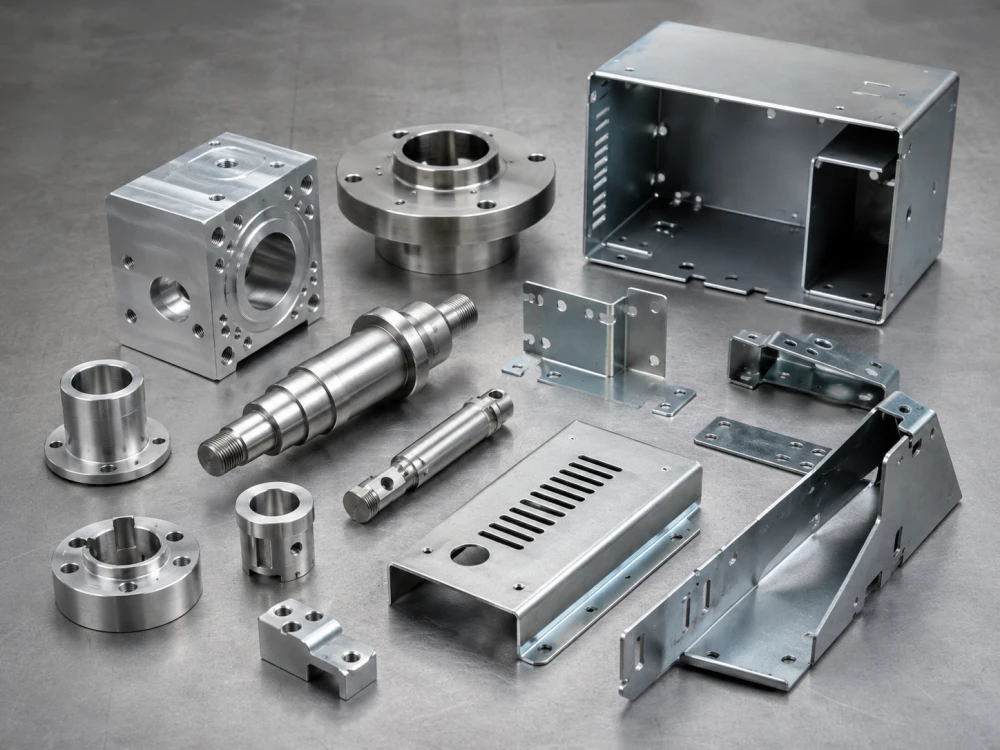
Some custom metal products require both machining and fabrication. For example, a metal enclosure may need laser-cut sheet metal panels, bent structures, welded corners, machined mounting holes, threaded inserts, and powder coating. A commercial display product may need stainless steel tubes, laser-cut plates, polished surfaces, and assembled hardware.
Common Materials for Custom Metal Parts
Material selection is one of the most important steps in custom metal part manufacturing. The material affects strength, weight, corrosion resistance, machinability, surface appearance, cost, and production difficulty.
Aluminum is widely used because it is lightweight, easy to machine, and suitable for anodizing. It is often used for housings, brackets, panels, fixtures, blocks, and appearance parts.
Stainless steel is selected when corrosion resistance, strength, and clean appearance are important. It is often used for hardware, panels, brackets, covers, decorative parts, and products used in demanding environments.
Carbon steel is strong and cost-effective. It is often used for frames, supports, mounting plates, welded structures, brackets, and industrial components. It usually needs surface treatment such as powder coating, plating, or painting to improve corrosion resistance.
Brass and copper are commonly used when appearance, conductivity, or special mechanical properties are required. Brass is often used for fittings, decorative hardware, bushings, and precision machined components. Copper is often used for electrical and thermal applications.
Titanium is used for special applications where high strength, low weight, and corrosion resistance are important. It is usually more expensive and requires more careful processing.
Surface Finishes for Custom Metal Parts
Surface finish can improve both function and appearance. For industrial parts, finishing may improve corrosion resistance, wear resistance, surface hardness, or cleanliness. For commercial and decorative products, finishing may also improve visual quality and product value.
Common surface finishes include anodizing, electroplating, polishing, brushing, sandblasting, powder coating, painting, passivation, black oxide, and laser marking. The right finish depends on the material, product use, appearance requirement, and working environment.
For example, aluminum parts are often anodized to improve corrosion resistance and appearance. Stainless steel parts may be brushed or polished for a clean finish. Carbon steel parts may be powder coated or plated to prevent rust. Brass and copper parts may be polished, plated, or treated for decorative purposes.
What Information Is Needed for a Quote?
To request a quote for custom metal parts, customers should provide as much useful information as possible. The most helpful files are 2D drawings, 3D models, samples, photos, sketches, or reference images. If drawings are not available, a clear product description can also be used for initial discussion.
Important quotation information includes material, quantity, dimensions, tolerance, surface finish, application, and any special requirements. If the part needs assembly, packaging, marking, or special inspection, these details should also be mentioned.
For example, a useful inquiry may include: “We need 100 pieces of aluminum brackets, anodized black, according to the attached drawing. The parts will be used for equipment mounting.” This kind of information allows the supplier to review the process, material, cost, and production feasibility more quickly.
Why Custom Metal Parts Are Important
Custom metal parts help products become more practical, reliable, and suitable for real use. They are not only used in large industrial equipment, but also in small commercial products, display systems, furniture, electronics, building hardware, and decorative applications.
For businesses, custom metal parts can solve problems that standard parts cannot solve. They can improve product structure, simplify assembly, match special dimensions, meet appearance requirements, and support small-batch product development.
For new product projects, custom metal parts are also useful for prototyping and testing. Before large production, customers can order a small quantity to check the structure, fit, finish, and performance. This helps reduce risk and improve the final product design.
Related Application Example
CNC machined parts and sheet metal parts are often used together in automation equipment. A machine may use machined shafts, flanges, housings, and mounting plates together with servo motors, planetary gearboxes, and rotary positioning modules.
For motion transmission projects, buyers can also compare planetary gearbox options and hollow rotary table solutions when designing automation systems that require torque transmission, indexing, or precision positioning.
Work with Machined Parts Pro
Machined Parts Pro supports custom metal parts for industrial and commercial applications. Our product scope includes CNC machined parts, sheet metal parts, metal hardware, brackets, enclosures, panels, decorative metal products, and small-batch custom components.
If you need custom metal parts, you can send your drawing, sample photo, product idea, material requirement, quantity, surface finish, and application details. We will help review your project and provide a practical quotation.
Need Custom Metal Parts?
Send your drawings, photos, material, quantity, finish, and application requirements. We will help review your project and provide a practical quotation.
Request a QuoteView Custom Metal Products | View Manufacturing Capabilities | View Metal Materials | Request a Quote